
PROJECT
Interior
PJ.161
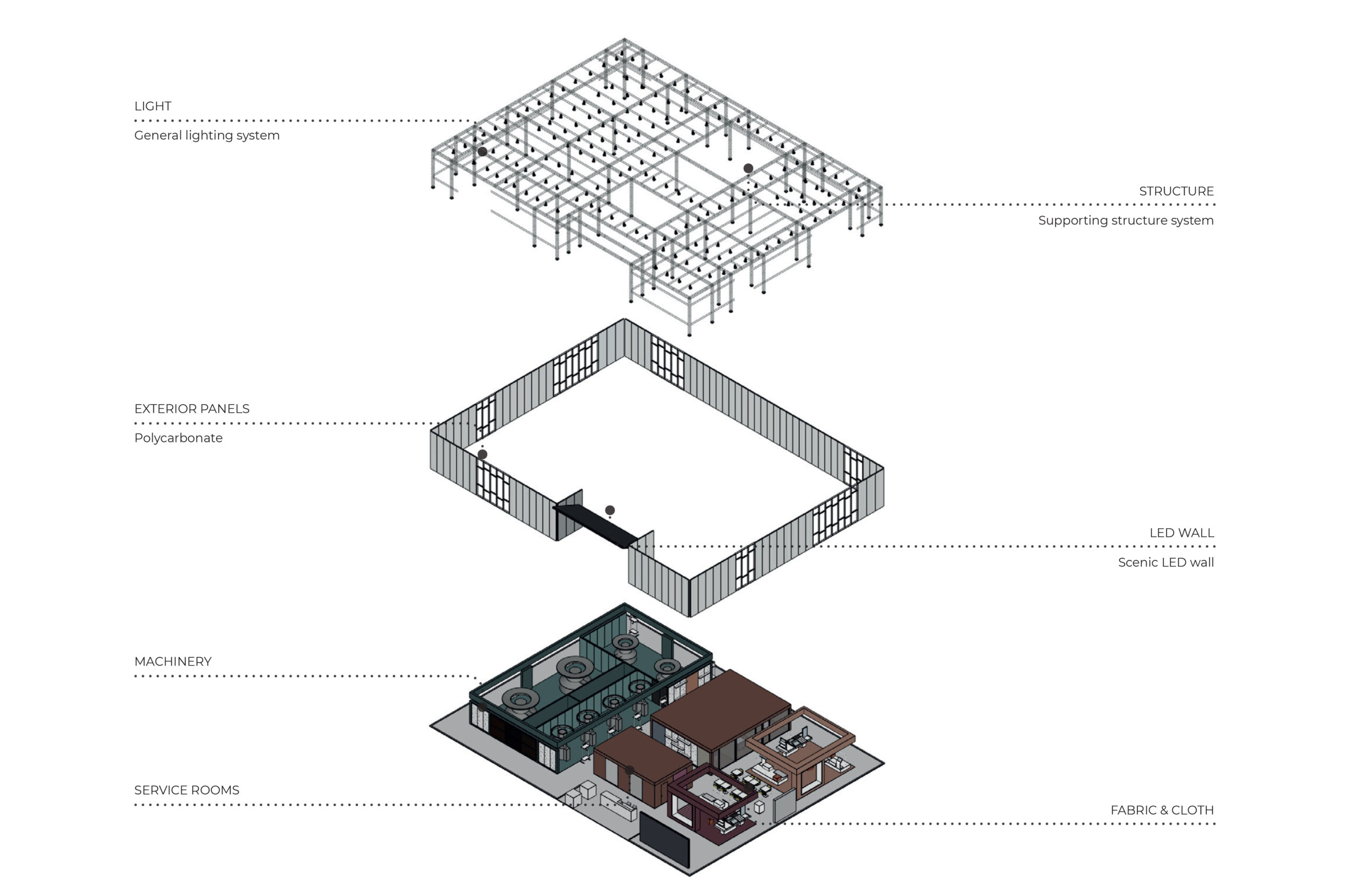
The Santoni exhibition booth is conceived as a flexible spatial system designed to adapt to different trade fair contexts and scales. Rather than a fixed configuration, the project proposes a modular concept capable of expanding or contracting according to the available space while maintaining a strong and recognizable identity.
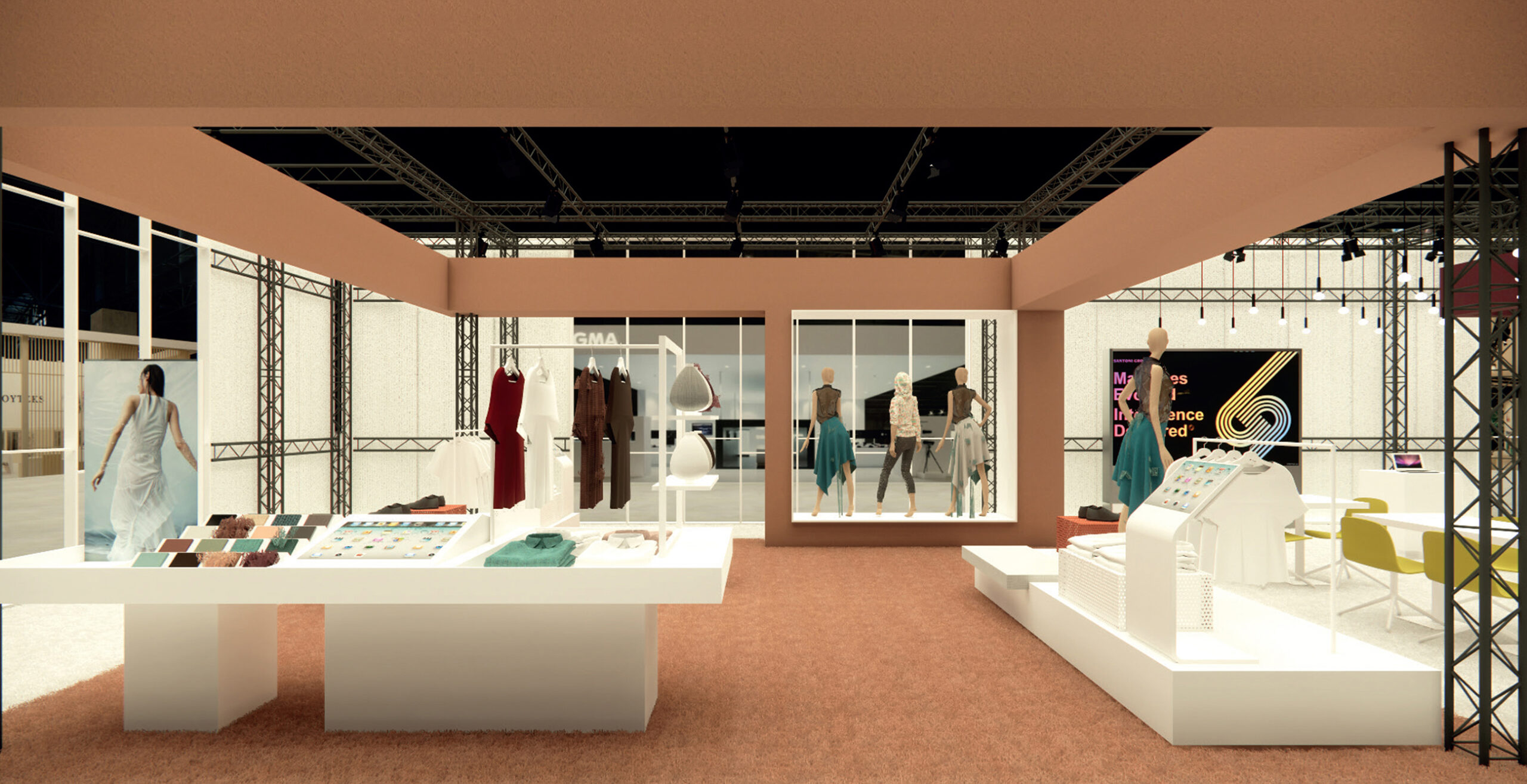
The booth is designed to showcase not only Santoni’s circular knitting machines but also the wide universe of products generated by their technologies—from technical yarns to sportswear, accessories, and advanced textile applications. The space therefore becomes both an exhibition and a narrative environment, where machinery, materials, and final products are presented as parts of a continuous production ecosystem.
The concept is based on a sequence of progressive perimeters inspired by the principle of Chinese boxes. Visitors approach the pavilion from the outside and gradually move inward through a series of layers that reveal the brand and its products step by step. This spatial progression transforms the visit into an exploratory experience, encouraging curiosity and engagement.
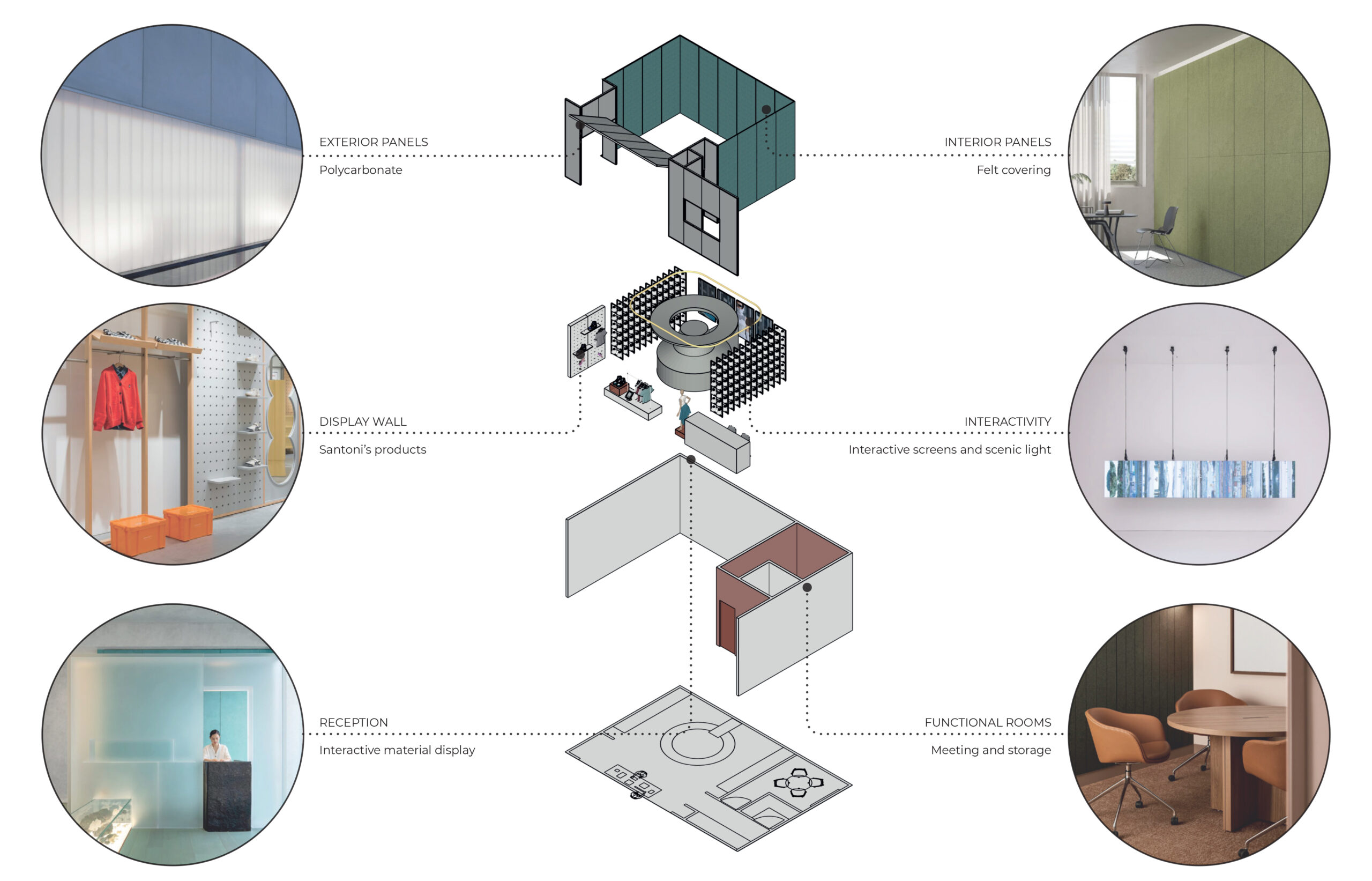
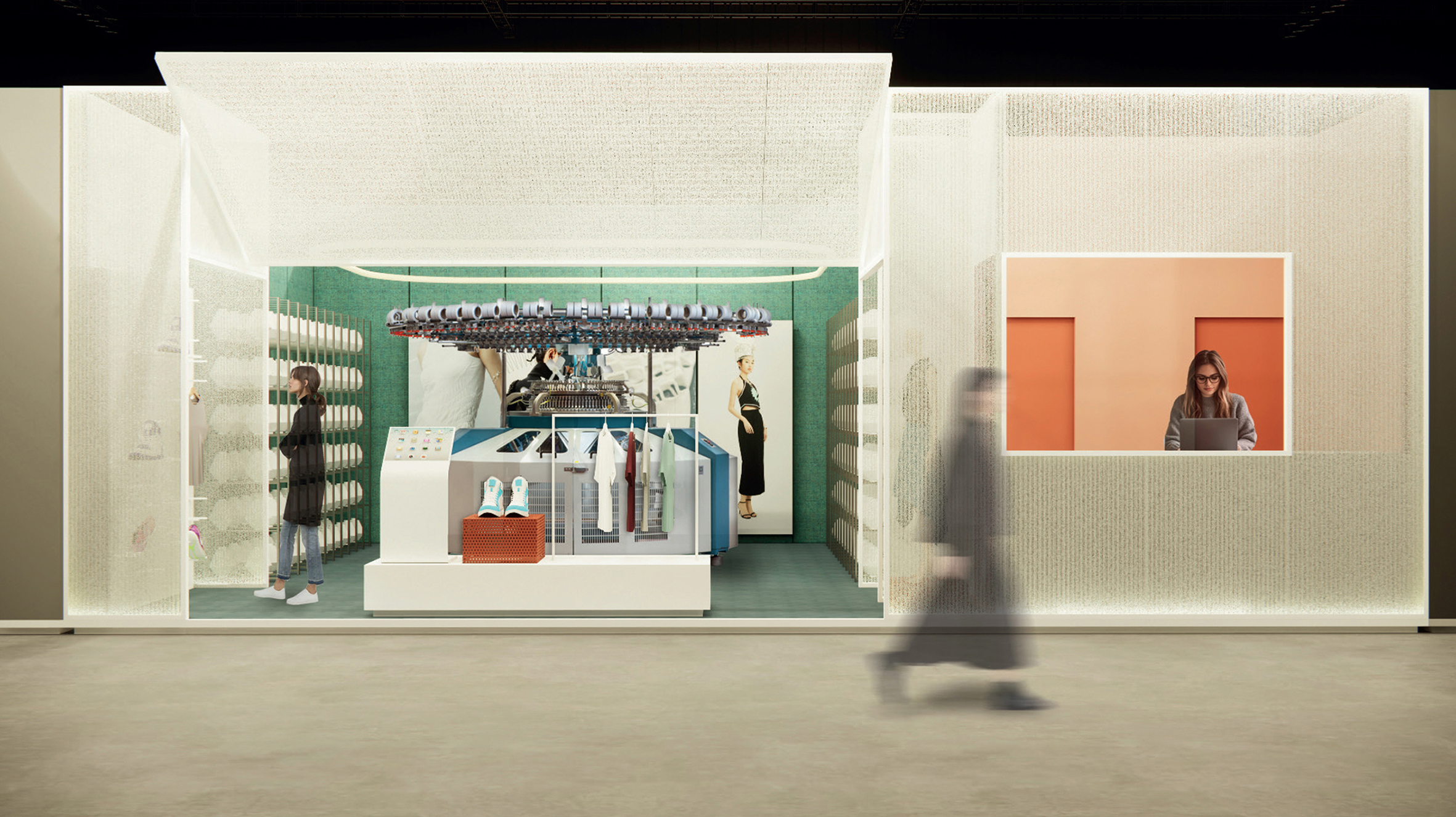
Transparency plays a central role in the design. The perimeter is defined by lightweight structures and panels in semi-transparent opaline polycarbonate that allow silhouettes, movements, and objects to be partially perceived from the outside. This subtle visual permeability creates a sense of openness and inclusivity, inviting visitors to enter and discover what lies beyond.
Clear orthogonal circulation paths organize the interior layout, ensuring an intuitive reading of the space while offering different modes of use and exploration. As visitors move deeper into the pavilion, glimpses of machines and yarns appear through openings and visual corridors along the perimeter, gradually revealing the technological core of the exhibition.
LED panels integrated into the architecture display explanatory videos and digital content, providing insights into Santoni’s technologies and their applications. Lightweight display structures present garments, accessories, and textile samples, illustrating the diversity of products generated by Santoni machines.
The pavilion combines open and welcoming areas with more intimate spaces. A reception area with an integrated bar opens toward the exterior, functioning as an accessible meeting point within the exhibition environment. Toward the center of the booth, more enclosed areas host meetings, presentations, and discussions, offering a quieter atmosphere for professional exchange.
At the heart of the pavilion, the machines and the yarns themselves become the protagonists. What is initially perceived only through partial views and translucent surfaces becomes fully visible as visitors explore the interior, revealing the technological and material processes that define Santoni’s identity.
Through transparency, layered spatial sequences, and carefully curated exhibition elements, the project creates a dynamic environment that communicates innovation while encouraging interaction, discovery, and engagement.